
Chapters of Giverny: a VR room that grows a Monet pond around you as you look
Chapters of Giverny: a VR room that grows a Monet pond around you as you look
duration
2 weeks
2 weeks
role
Solo UX Designer
Solo UX Designer
tools
Unity, Claude Code + Unity MCP
Unity, Claude Code + Unity MCP
tl'dr
A VR room built from real Monet scans, where you can get as close to the brushwork as you want and water lilies bloom in the pond as you move through it.
A VR room built from real Monet scans, where you can get as close to the brushwork as you want and water lilies bloom in the pond as you move through it.
Turn on sound to really be present in the room!
Turn on sound to really be present in the room!
the purpose
The room lets people get as close to a Monet as they want, for as long as they want, and have the painting respond.
Museums give you ninety seconds in front of a canvas and a rope keeping you a metre back. This VR room removes both. Four walls of real public-domain Monet scans wrap a 34m space, so you can walk right up to the brushwork and stay as long as you want. Water lilies bloom in the pond at your feet as you move through it, and lights surface with short beats of Monet's story at Giverny. Built in Unity 6 with URP.
This concept includes 4 different chapters for 4 different eras, this project explores chapter 1: building the water garden, 1897 to 1900.
the features
Three features carry the experience. The pond responds to where you go, the story surfaces as you cover ground, and the paintings themselves change across chapters.
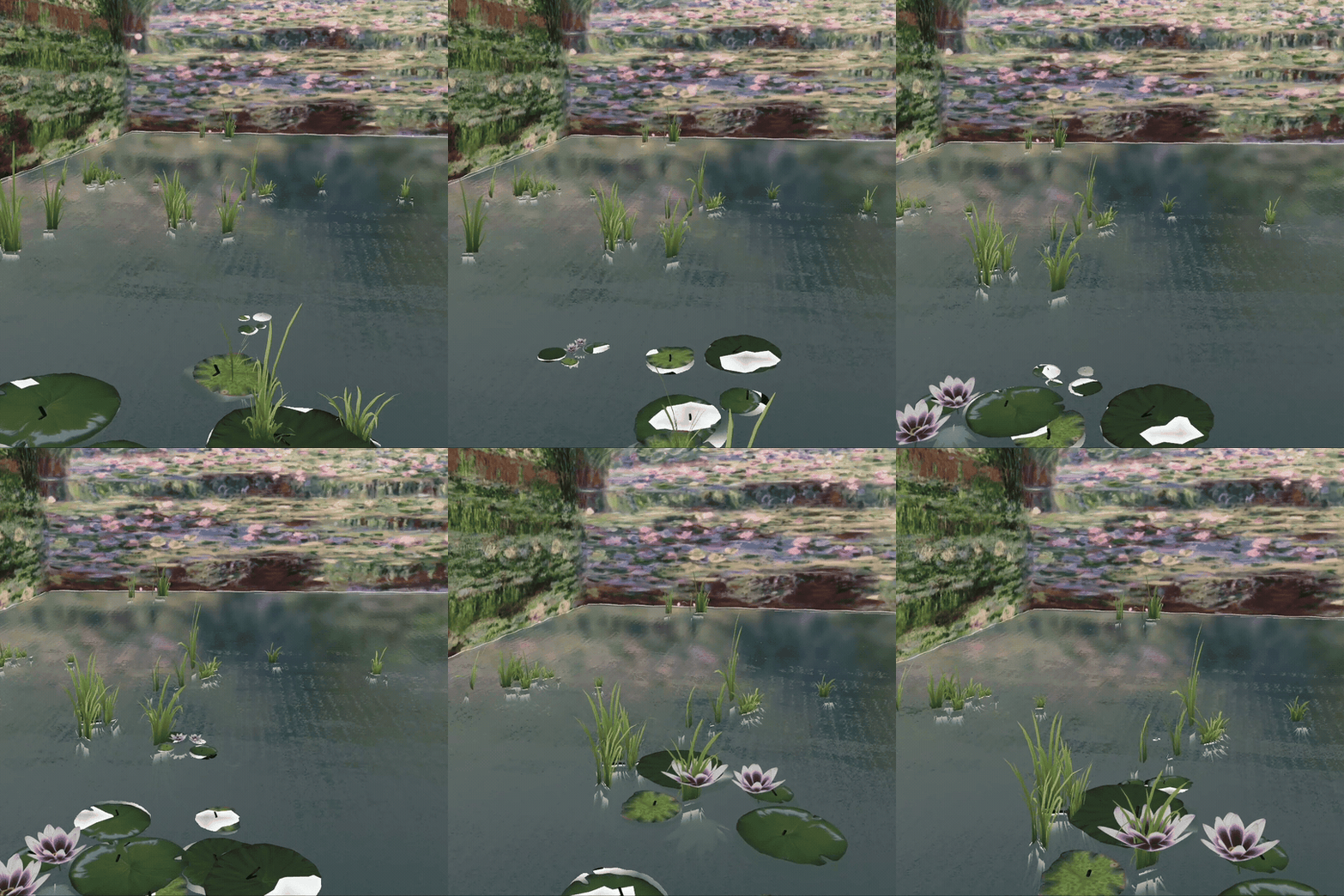
Lilies bloom where you look
Water lilies open in the pond at your feet as you move through the room. The floor becomes a record of where you spent your attention, so the pond is something you grew rather than something you were handed. It also gives you a reason to stay in one room for eight minutes without being told to.
Lights carry Monet's story
Cover enough of the pond and a light surfaces with a short beat of his life at Giverny, there are two per chapter. No text, no narrator explaining Impressionism. One thing you couldn't get from a wall label. The first light in chapter one tells you he dug this pond himself before he ever painted it.

Chapters change the paintings around you
The room cycles through four periods of his life, and the paintings visibly change across them: bounded and traditional in 1899, borderless by 1906, muddy and near-abstract by 1920, clear blues again after surgery in 1923. Collect both lights and the chapter dissolves. The change is the narrative. The voiceover only confirms what your eyes already noticed.
what did i learn?
🪞 Reflection is what made things feel real
Until the lilies and grass reflected in the water, everything looked pasted on top of the pond rather than sitting in it. One rendering feature did more for believability than any amount of model detail. It also broke in an instructive way: reflection probes can't mirror small surface objects, and my first fix rendered behind the water and vanished entirely. The lesson is that in VR, presence comes from how things relate to each other, not from how good each thing looks alone.
📐 Scale isn't a number, it's a feeling you have to walk
I built the room 25x life-size and didn't notice, because from above in the editor it looked perfectly proportioned. Then I pressed play and I was tiny, falling in slow motion through a space that read fine on screen and felt wrong the moment I was inside it. Flat views tell you about proportion. Only walking tells you about scale. Every spatial call since then, how far back the walls sit, how long it takes to cross the room, how close you can get to a canvas, I've made from inside the space rather than looking at it.
very thankful to Prof. Katie Temrowski and my peers for such great feedback throughout!